Born in Amsterdam in 1972, Viviane Sassen studied fashion design and photography. Her work has been exhibited internationally at institutions including Collezione Maramotti, Huis Marseille, Deichtorhallen Hamburg, The Photographers’ Gallery and the Museum of Contemporary Photography Chicago. Sassen won the Prix de Rome in 2007 and the International Center of Photography’s Infinity Award in 2011. She received the David Octavius Hill Medal and a Deutsche Börse Photography Prize nomination in 2015. The travelling survey Phosphor: Art & Fashion opened in Paris in 2023 and has since toured Shanghai, Kyoto, Stockholm and Amsterdam.
Never confined by the category of fashion photography, Sassen has developed a distinctive visual language in which fashion is but one element. Central to her work are the form of the human body and its relationship to its surroundings. Transcending frameworks of gender—including femininity—and race, the body merges with its environment and, in recent works incorporating drawing and painting, with an energy that emerges from within, giving rise to increasingly multilayered images. In this interview, Sassen discusses the relationship between the body and her artistic world.
ヴィヴィアン・サッセンは、1972年アムステルダム生まれ。幼少期をアフリカで過ごしたのち、オランダに戻り、ファッションデザインと写真を学んだ。これまでにコレツィオーネ・マラモッティ、ハウス・マルセイユ美術館、ロンドンのフォトグラファーズ・ギャラリー、シカゴ現代写真美術館など、世界各地で作品を発表してきた。2007年にローマ賞、2011年に国際写真センターのインフィニティ賞を受賞。2015年にはデイヴィッド・オクタヴィウス・ヒル・メダルを受賞し、ドイチェ・ボーズ賞にノミネートされている。日本では2024年のKyotographieで開催された大規模な展覧会「Phosphor: Art & Fashion」で知名度を高め、この展覧会は2023年のパリに始まり、上海、京都、ストックホルム、アムステルダムを巡回した。
ファッション写真、という枠に収まることなく、ファッションを一要素として自身の表現と作品世界を展開させてきた彼女の作品には、人体のフォルムや、人体と環境との関係性を欠かすことができない。その上で、女性性などのジェンダー、人種などの枠組みを超越し、それが環境と、さらには近年のドローイングやペインティグを施した作品では内面からでるエネルギーと重なり、ますます多層なイメージを生み出している。本インタビューでは彼女の作品世界と、身体の関係について話を聞いた。
–
Questions to Viviane Sassen
ヴィヴィアン・サッセンへの質問
1) Please briefly explain the concept of your work.
あなたの作品のコンセプト(構想・主題)について、簡潔に説明してください。
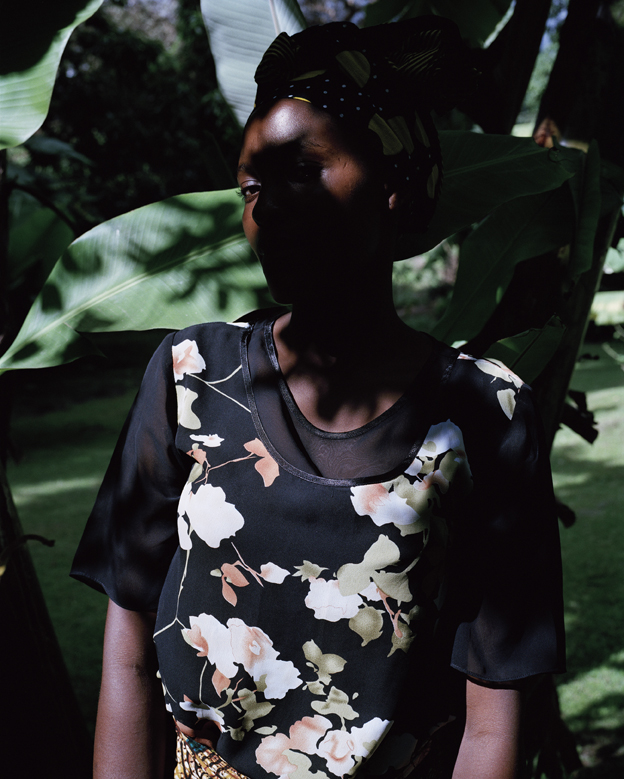
My childhood memories of Kenya have been of great influence in my work; especially the use of light, shadow, colour, which directly stem from these formative years spent on the Equator. Revisiting my Kenyan village in the early 2000’s made me realise that the image of Africa in mainstream media was very limited, and I started making staged photographs with Kenyan friends and their families – tapping into a world of poetry, memory, surrealism,dream.
私の作品に大きな影響を与えているのは、ケニアで過ごした幼少期の記憶です。とりわけ光や影、色彩の使い方は、赤道直下で過ごした形成期に直接由来しています。2000年代初頭にケニアの村を再訪した際、主流メディアにおけるアフリカ像がきわめて限定的であることに気づき、ケニアの友人やその家族とともに演出された写真を撮り始めました。そこには、詩や記憶、シュルレアリスム、夢といった世界が息づいています。
The investigation of the meaning of the Shadow which is so present in my work, has lead meto making the series UMBRA, also part of this exhibition. It was the first time I started experimenting with moving image / projection / sound / text in large scale installations. The existential fear of Death that I have felt over many years during childhood and adolescence, drove me to dive into this theme of Death and the sub-conscious, and explore various ways to connect myself with these themes, while also investigating the medium of photography along the way – stretching its boundaries.
私の作品において重要な要素である「影」の意味を探求する中で、《UMBRA》というシリーズを制作しました(本展にも含まれています)。このシリーズは、映像/プロジェクション/音/テキストを組み合わせた大規模なインスタレーションに初めて取り組んだものでもあります。幼少期から青年期にかけて長年感じてきた死への実存的な恐れが、死や無意識というテーマへと私を深く導き、それらと接続する多様な方法を探ると同時に、写真というメディアそのものの可能性を押し広げていきました。
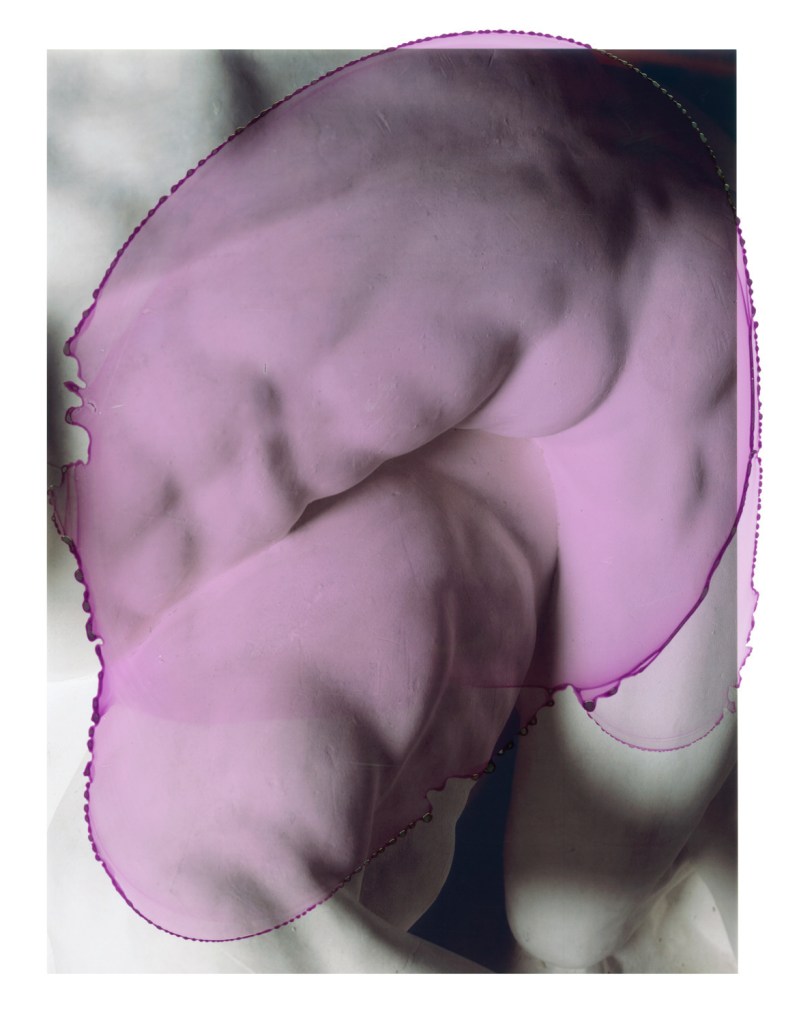
I’ve always been drawn to an idea of the ‘surreal’ whether it be fetishised objects of my own gaze or the collage and photomontage techniques which are inspired by the surrealist group. My more recent work MODERN ALCHEMY and CADAVRE EXQUIS are examples of this
love for Surrealism and photomontage. They are based on the ‘exquisite corpse’ technique: a creative game that surrealists were fond of playing. Body parts are connected in ways that produce odd hybrid creatures.
I often refer to myself as a sculptor, in the way I approach my subjects and in the way I construct an image.
私はこれまでも常に「シュルレアル」という概念に惹かれてきました。それは、自らの視線がフェティッシュ化する対象であったり、あるいはシュルレアリストたちに触発されたコラージュやフォトモンタージュの技法であったりします。近年の作品《MODERN ALCHEMY》や《CADAVRE EXQUIS》*は、このシュルレアリスムとフォトモンタージュへの愛着を示すものです。これらはシュルレアリストたちが好んだ創造的なゲーム「エクスキジット・コープス(優美な屍骸)」の手法に基づいており、身体のパーツを奇妙に接続することで、異形のハイブリッドな存在を生み出します。私は被写体へのアプローチやイメージの構築方法という点において、自らをしばしば彫刻家のように捉えています。
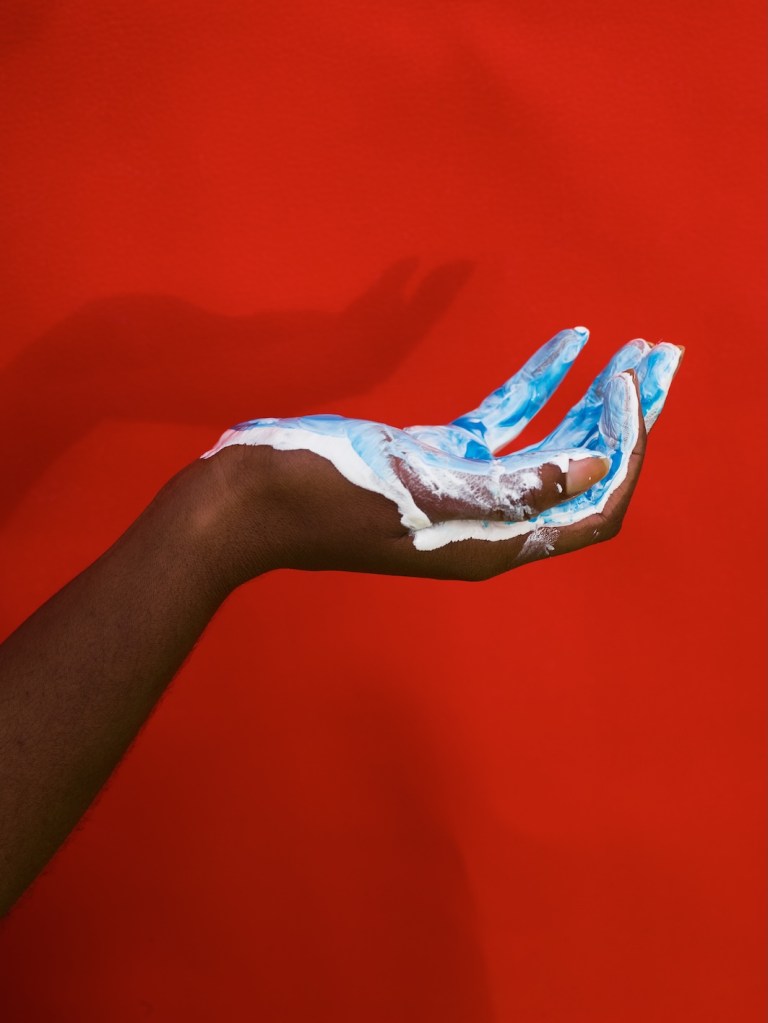
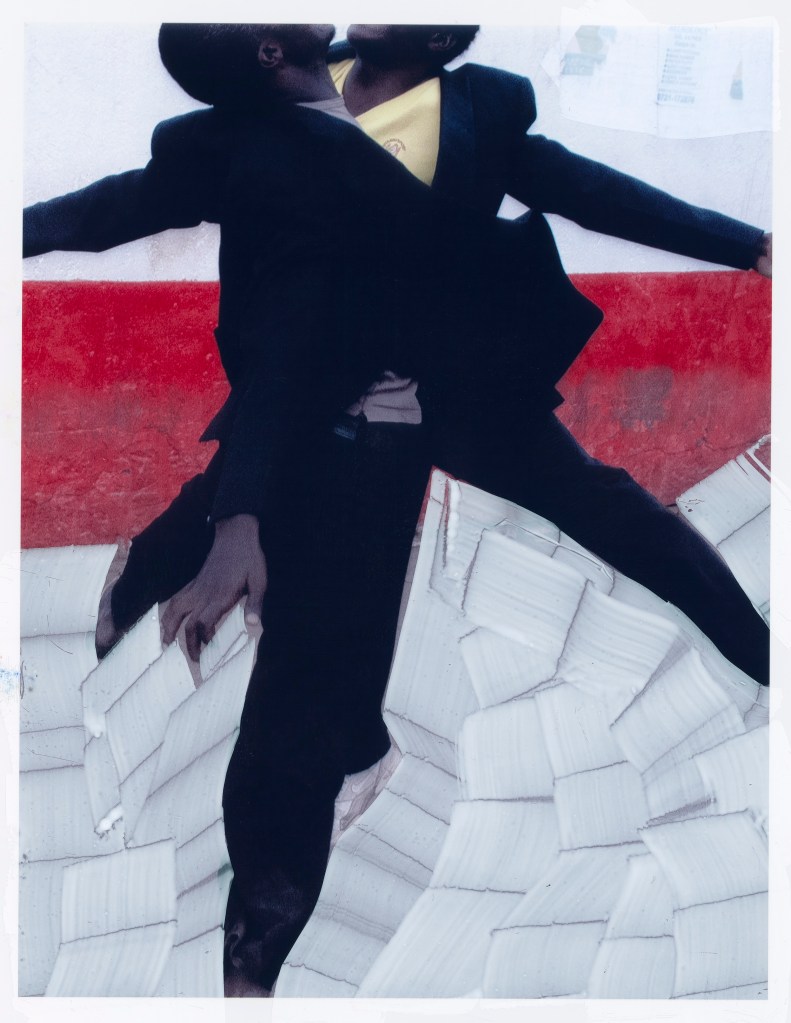
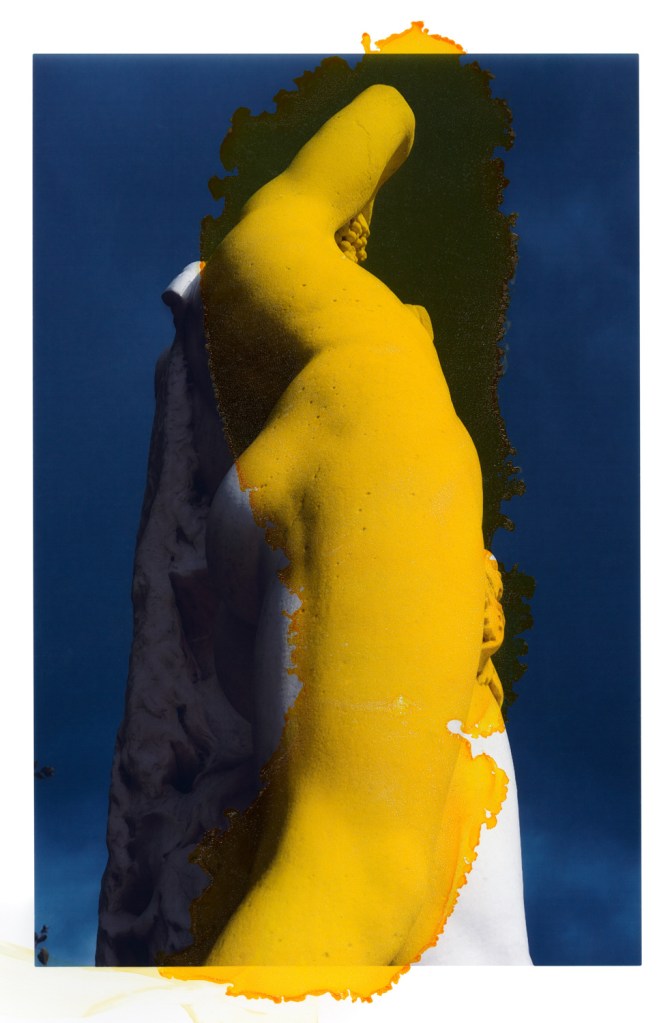
Since about 2017 I also started painting on my photo prints. I feel that my language shifted when I introduced ink, paint and collage to my photographic practice, deepening the surrealist and sculptural element in my imagery. The experiments with uncanny shadows, fragmented bodies and dream-like landscapes project mundane scenes into the realm of the fantastical.
2017年頃からは、写真プリントの上に描画することも始めました。インクや絵具、コラージュを写真の実践に取り入れたことで、自身の表現言語は変化し、イメージにおけるシュルレアルで彫刻的な要素がより深化したと感じています。不気味さを帯びた影、断片化された身体、夢のような風景といった実験を通して、ありふれた日常の場面は幻想的な領域へと転位していきます。
What I find fascinating, is the the friction between the ‘real’ versus ‘unreal’, and how our perception shifts when changing the context (of a work / an image). The idea of a Parallel Universe is at the core of my practice, whether fantastical or in real life. Photography has this magical ability, just like dreams, mirrors, black holes… in Breton’s words; ‘the presence of the marvellous’.
私が魅了されているのは、「現実」と「非現実」のあいだに生じる摩擦、そして(作品やイメージの)コンテクストが変化することで私たちの知覚がどのように揺らぐかという点です。〈並行世界〉という発想は、幻想的なものであれ現実のものであれ、私の実践の核にあります。写真は夢や鏡、ブラックホールと同じように、そうした世界へと通じる魔術的な力を備えています。ブルトンの言葉を借りれば、それは「驚異的なものの現前」なのです。
2) What role does the motif of the body play in your work?
あなたの作品において、「身体」というモチーフはどのような役割を果たしていますか?
I think the body has always played a huge role in my work. As long as I can remember, the body was part of the conversation in our home, as my father was a doctor. When we lived in Kenya, I often visited the hospital where he worked, and I vividly remember the patients waiting in the hallways or on the grass in the garden. During the 70’s in East Africa, it was still a very normal sight to see people who had lost a limb or who suffered from Polio. Next to our house was the ‘Crippled Home’ where young patients lived who suffered from Polio. Sometimes I would play with them in the playground, and as I was still very young (3 – 5 yr) I didn’t realize that their deformed limbs and bodies were signs of a very serious disease. I found them intriguing and beautiful in their own special way. Later, when we went back to the Netherlands, my father worked as a GP and he held his practice on the ground floor of our home. So there were always people coming to our house who had issues with their body, and a lot of conversations about sickness and health were held at our kitchen table between my parents. Being a quite sensitive child with a lot of fantasy, those stories had a profound impact on me. Although I learned that most issues of the body will vanish naturally over time and don’t need a doctor, I never truly learned to trust my body. For a long time I’ve had an existential fear of death, which started in my late teenage years. When I got very sick and needed to be hospitalized during a back-pack trip in India when I was 19, I lost so much body fluids that I started to hallucinate and at that moment I was absolutely convinced I would die there. That might have triggered the fear of death and the mistrust of my own body.
身体は、私の作品において常に非常に大きな役割を果たしてきたと思います。記憶にある限り、身体は家庭内での会話の一部でした。父が医師だったからです。ケニアに住んでいた頃、私は父が働く病院によく行き、廊下や庭の芝生で待つ患者たちの姿を鮮明に覚えています。1970年代の東アフリカでは、手足を失った人やポリオを患った人々の姿はまだごく普通の光景でした。私たちの家の隣には、ポリオを患う若い患者たちが暮らす「Crippled Home」がありました。幼い頃(3〜5歳)、私は彼らと遊び場で一緒に遊ぶこともありましたが、彼らの変形した手足や身体が重い病の徴であるとは理解していませんでした。むしろ、それらは私にとってどこか特別なかたちとして、興味深く、美しいものに映っていたのです。
その後オランダに戻ると、父は一般開業医として働き、自宅の1階で診療を行っていました。そのため、身体に不調を抱えた人々が常に家を訪れ、食卓では病気や健康についての会話が頻繁に交わされていました。感受性が強く、想像力の豊かな子どもだった私にとって、それらの話は深い影響を与えました。身体の問題の多くは時間とともに自然に消えていき、必ずしも医者を必要としないのだと学びはしましたが、自分の身体を心から信頼することは最後までできませんでした。
私は長いあいだ、死に対する実存的な恐怖を抱えてきました。それは10代後半に始まったものです。19歳のとき、インドをバックパックで旅している最中に重い病にかかり、入院を余儀なくされました。体内の水分を大量に失い、幻覚を見るほど衰弱した私は、その瞬間、確実に自分はそこで死ぬのだと信じ込んでいました。この経験が、死への恐れや自分の身体への不信感を引き起こしたのかもしれません。
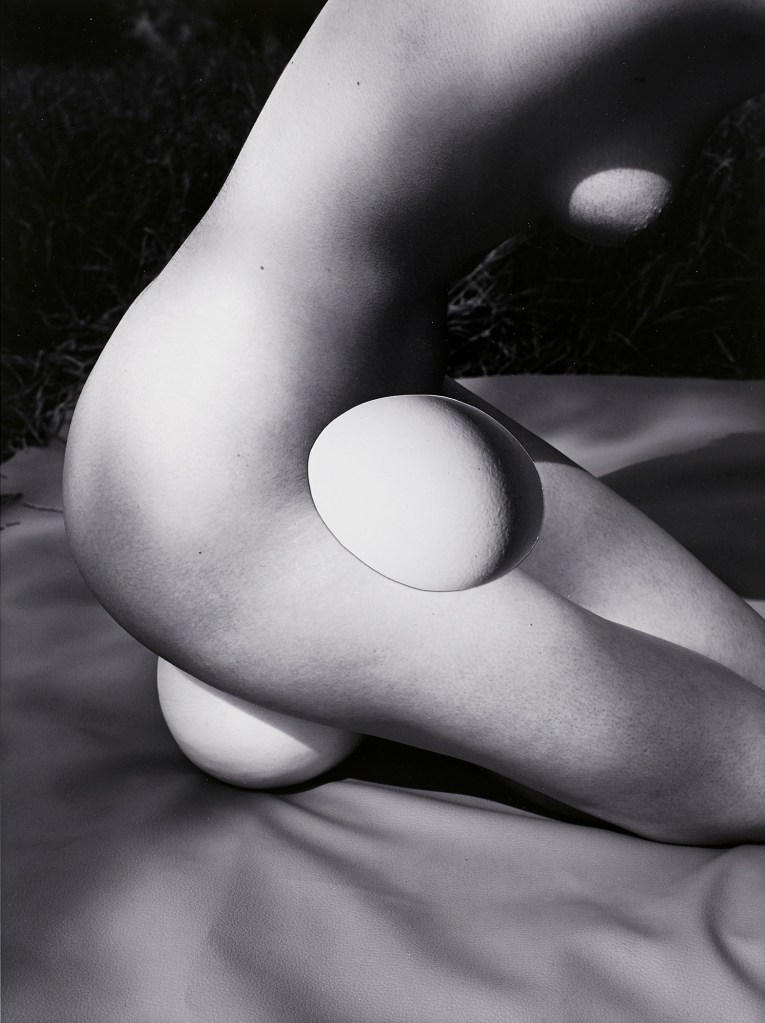
I’ve always been intrigued by pictures of the human body when looking at the medical books of my father. Maybe the fact that a doctor is often trained to look at one problem, one element of the body, somehow detaching that single element / body part from the rest of the body, I’ve been inspired by that way of looking at the body too. In those medical books, you would often see just the one object; a leg, ear, hand or nose; the rest of the body or face hidden for privacy of the patient. In my work I often do the same, quite subconsciously. As a teenager I would also experiment with my own body, making exaggerated shapes in front of the mirror. By looking at my own body, closing one eye, I could make visual ‘sculptures’ – just as I do in my photographs. For instance: from one particular viewpoint, hiding my fingers behind the palm of my hand, I could make a shape that resembled an arm without a hand – a slightly weird and disturbing sight – which magic would disappear immediately if it would be a 3D sculpture you could view from different angles. The photographic medium helped me in such a way that it enabled me to make these body-sculptures; a 2D image of a 3D object. In that sense I often refer to myself as a sculptor, but only photography can help me to transcend the magic of these sculptures. They are are real and surreal, abstract and human, all at the same time. (I’m not sure I can explain it in the correct way)
父の医学書を眺めながら、人間の身体のイメージにずっと強く惹かれてきました。医師がしばしば、身体の中のひとつの問題や要素に焦点を当て、その部分を全体から切り離して捉えるように訓練されていること――そうした身体の見方にも、私は影響を受けているのだと思います。医学書の中では、患者のプライバシーに配慮して、身体や顔の全体は隠され、脚や耳、手、鼻といったひとつの部分だけが提示されることがよくあります。私の作品でも、無意識のうちに同じようなことを行っています。
思春期には、自分の身体を使って実験することもありました。鏡の前で誇張されたかたちをつくり出したり、片目を閉じて自分の身体を見ることで、視覚的な「彫刻」を生み出していたのです。それは、写真の中で行っていることと同じです。たとえば、ある特定の視点から、手のひらの後ろに指を隠すと、手のない腕のような形が現れる――どこか奇妙で不穏な光景です。しかしもしそれが三次元の彫刻であれば、見る角度が変わることで、その魔法はすぐに消えてしまうでしょう。
写真というメディアは、そうした身体の彫刻を可能にしてくれました。三次元の対象を二次元のイメージとして定着させることで、その一瞬の「見え」を固定できるのです。そういう意味で、私は自分をしばしば彫刻家だと捉えていますが、同時に、こうした彫刻的な魔法を超えていくことができるのは写真だけだとも感じています。それらは同時に、現実であり非現実であり、抽象であり人間的でもある――うまく説明できているか自信はありませんが。
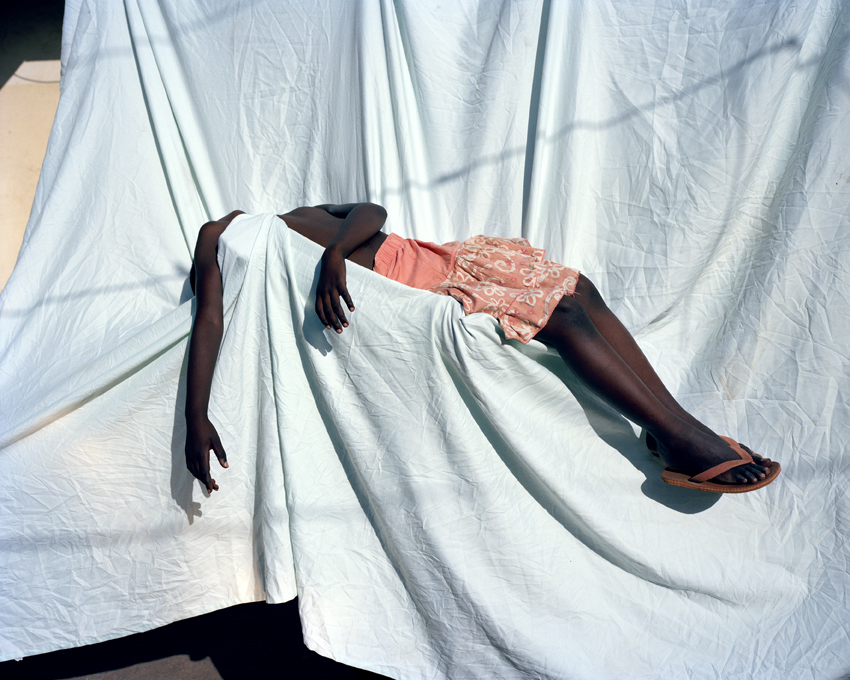
I hardly ever depict the body in its entirety. Often you see a body without a head / face, or a face without the body. Or you see abstracted body shapes, either dressed with clothes, fabrics, just color, or the naked body. As I’ve been trained in Fashion for 2 years before I started my photography studies, and I also worked as a fashion model for a few years, the fashion image became one of the ways I could express myself. My fashion pictures are hardly ever about glamour, beauty or fashion brands; they are much more about volume, abstraction, shapes, contrasts, composition… in the formal sense. And they are about mystery, suspense, transformation, sensuality or even sexuality – but from a female point of view, challenging the male gaze. At some point in my early 20’s I started to make a lot of self-portraits; this was the same time that I worked as a model. I believe making self-portraits was a way to re-gain the power over my own body, my own image. The fashion photographers I worked with as a model often tried to cross my boundaries, tried to make me look sexy while I wasn’t comfortable in that role. I learned how to switch-off the insecure girl and how to behave as a confident woman, while deep inside I was often feeling this ambiguity… Turning the lens on myself, exploring my body image and sexuality through my own camera, was a safe way to explore myself and gain more self-confidence. The camera became a tool for self-expression.
In the past I’ve referred to myself at that time as a shy exhibitionist; showing my naked body but not my face, or vice-versa; showing my face but not my body. There should always be something to be curious about; something hidden, something secret, something that won’t be revealed; something hiding in the shadows.
私は身体を完全なかたちで描くことはほとんどありません。しばしば、顔のない身体や、身体のない顔が現れます。または、衣服や布、あるいは単なる色で覆われた抽象化された身体のかたち、あるいは裸の身体が登場します。
私は写真を学ぶ前に2年間ファッションを専攻し、数年間はファッションモデルとしても活動していたため、ファッションイメージは自分を表現するひとつの方法となりました。とはいえ、私のファッション写真は、グラマーや美しさ、ブランドをテーマにしたものではほとんどありません。むしろ、フォルムの観点から、ボリューム、抽象性、形、コントラスト、構図といった要素に焦点を当てています。そしてそれらは、謎めいた感覚、緊張感、変容、官能性、あるいはセクシュアリティといったものを、女性の視点から、男性的なまなざしに対抗するかたちで描いています。
20代前半のある時期、私は多くのセルフポートレートを撮るようになりました。それは同時にモデルとして働いていた時期でもあります。セルフポートレートを撮ることは、自分の身体やイメージに対する主導権を取り戻す方法だったのだと思います。モデルの仕事で関わったファッションフォトグラファーの中には、私の境界を越えようとしたり、私が心地よく感じていないのに「セクシー」に見せようとしたりする人がいました。私は、自信のない少女を切り離し、堂々とした女性のように振る舞う方法を身につけましたが、その内側ではいつも曖昧な感情を抱えていました。
そんななかで、自分自身にカメラを向け、自分の身体イメージやセクシュアリティを自らのレンズを通して探ることは、安全な方法で自分を理解し、自信を取り戻す手段になったのです。カメラは自己表現のための道具となりました。
当時の自分を、私は「内気なエキシビショニスト(内気な自己露出者)」と呼んでいました。裸の身体を見せても顔は隠す、あるいはその逆に、顔を見せても身体は隠す。常に何か好奇心をかき立てるもの、何かが隠され、秘密であり、明かされないもの、影の中に潜むものがあるべきだと思っていました。
4) How do you think this theme connects to contemporary society and the world today?
このテーマは、現代社会や今日の世界とどのようにつながっていると思いますか?
I’m not sure I can answer that question, as my work is so personal and the world is a big place. Although I’m intrigued by transformation, I’m less interested in how modern society tries to transform the body in order to meet beauty standards. It’s rather boring…! Luckily, there’s also a movement of body positivity and diversity, which is more interesting. To be honest, I’ve never really tried to make work that is political – on the contrary; I usually tried to make work with goes beyond the political; which is universal and timeless. But in these difficult times we live in now, everything becomes political… Whether it’s intended or not.
In the world of image, media, photography, I guess AI will play a huge part in the time to come. Sometimes the digital world makes us believe that time is of no importance, everything is possible, decay is non-existing, death is reversable. However, in the real physical world we always have to deal with the reality of our own bodies; our body will keep on reminding us of what it means to be alive, to be human. What is real and tangible. And gravity will pull us to the Earth. There is profound tragedy and beauty in that.
その問いにうまく答えられるかは分かりません。私の作品はとても個人的なものですし、世界はあまりにも広いからです。変容というテーマには惹かれていますが、現代社会が美の基準に合わせるために身体を変えようとするあり方には、あまり関心がありません。正直なところ、少し退屈に感じます。とはいえ、ボディ・ポジティビティや多様性をめぐる動きには興味を引かれます。
率直に言えば、これまで自分の作品を政治的なものにしようとしたことはほとんどありません。むしろ、政治性を超えた、より普遍的で時間を超えるものを目指してきました。しかし、いま私たちが生きているこの困難な時代においては、あらゆるものが政治的になってしまう――意図しているかどうかにかかわらず。
イメージやメディア、写真の領域においては、これからAIが大きな役割を果たしていくでしょう。デジタルの世界は、ときに時間の重要性を忘れさせ、あらゆることが可能で、劣化もなく、死さえも可逆的であるかのような錯覚をもたらします。しかし、現実の物理的な世界において、私たちは常に自分自身の身体という現実と向き合わなければなりません。身体は、生きていること、人間であることの意味、そして何が現実で触れうるものなのかを、絶えず思い出させてくれます。そして重力は、私たちを地へと引き戻し続ける。その事実の中には、深い悲劇性と同時に、美しさが宿っているのです。
*優美な屍(したい)シュルレアリスムの文脈で重要な概念。シュルレアリストたちが行っていた創作ゲームの名前
–
https://www.vivianesassen.com/
–
Matterreal Audio: 003: Conversation with Viviane Sassen
 Matterreal